© CyNex Systems, All rights reserved. 2024
Industry-Inspired Pneumatic Training Systems
You are here: Cynex.ca
Educational & Laboratory Equipment - Industry-Inspired Pneumatic Training Systems
Popular Services:
Cynex Systems
Engineering. Manufacturing. Automation.
One Idea. One vision.
Turning possibilities into performance.
>> Get In Touch
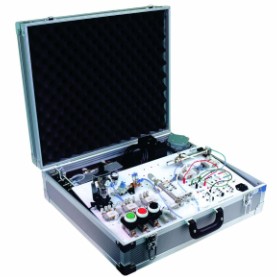
At Cynex Systems, we focus on industry-inspired pneumatic training systems designed to support engineering education, laboratory instruction, and hands-on learning at universities. These systems can help students understand the principles of compressed air technology and its applications in industrial automation, manufacturing, and mechanical engineering. By combining practical components with educational experiments, pneumatic training systems provide students with opportunities to explore how pneumatic circuits operate, how components interact, and how compressed air is used to control industrial processes. Training equipment can be adapted to university curricula, laboratory requirements, and specific learning outcomes.
Engineering & Design Capabilities
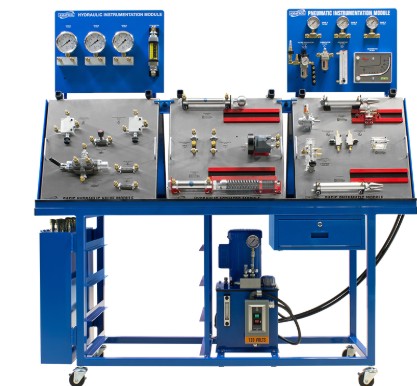
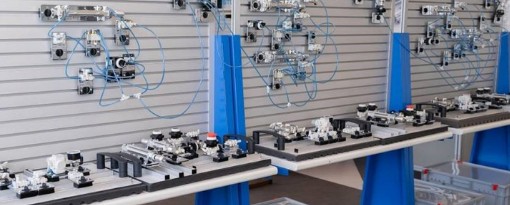
Pneumatic training systems can incorporate industrial-style components such as pneumatic cylinders, directional control valves, pressure regulators, flow control valves, filters, pressure sensors, tubing, and air preparation units. Depending on the educational objectives, systems may also include electrical control circuits, programmable logic controllers (PLCs), sensors, and human-machine interfaces (HMIs). These components can be arranged on modular training panels or laboratory workstations, allowing students to build, modify, and test different pneumatic circuits. The modular approach can support progressive learning, from fundamental pneumatic principles to more advanced automation applications.
Hands-On Learning & Experimental Activities
University students can use pneumatic training systems to investigate air pressure, flow control, actuator movement, directional control, and sequential operation. Practical exercises may include circuit assembly, component identification, troubleshooting, performance observation, and the interpretation of system behaviour under different operating conditions. More advanced experiments can introduce electro-pneumatic control, sensor-based sequencing, PLC programming, and the coordination of pneumatic actuators with electrical control systems. These activities can help students connect theoretical concepts with practical engineering applications while developing analytical and problem-solving skills.
Industry-Inspired Automation Applications
Designed around concepts commonly encountered in industrial environments, pneumatic training systems can demonstrate applications such as pick-and-place mechanisms, clamping devices, material handling, sorting operations, and automated workstations. By working with representative industrial components and control methods, students can gain a better understanding of how pneumatic technology contributes to manufacturing and automated production. Such experience can also introduce important considerations in system design, operational efficiency, maintenance, and troubleshooting.
Supporting University Teaching & Research
Pneumatic training systems can support undergraduate engineering programs, technical laboratories, mechatronics courses, and research activities involving fluid power and automation. Their educational value can be enhanced through structured experiments, circuit diagrams, laboratory exercises, and opportunities for students to design and evaluate their own control solutions.
Cynex Systems aims to support universities seeking practical, adaptable training equipment that complements classroom instruction and encourages engineering experimentation. Depending on project requirements, systems may be customized to suit available laboratory space, course content, student skill levels, and integration with other automation training platforms.
Cynex Systems — Empowering University Engineering Education Through Industry-Inspired Pneumatic Training.
- Engineering
- Manufacturing
- Mechatronics
- AI and Machine Vision
- Automation And Robotics