© CyNex Systems, All rights reserved. 2024
Mechatronics Training Systems
You are here: Cynex.ca
Educational & Laboratory Equipment - Mechatronics Training Systems
Popular Services:
Cynex Systems
Engineering. Manufacturing. Automation.
One Idea. One vision.
Turning possibilities into performance.
>> Get In Touch

At Cynex Systems, we focus on industry-inspired mechatronics training systems designed to support university engineering education, laboratory instruction, and hands-on technical learning. These systems bring together mechanical mechanisms, electrical and electronic components, sensors, actuators, embedded controllers, and automation technologies to help students understand how modern integrated engineering systems are designed and operated. Mechatronics is a multidisciplinary field that combines mechanical engineering, electronics, control engineering, computer programming, and automation. It plays an important role in robotics, smart manufacturing, industrial machinery, automated production, and intelligent products. Through practical training, students can explore the interaction between these disciplines while developing the skills needed to solve real-world engineering problems.
Engineering & Design Capabilities
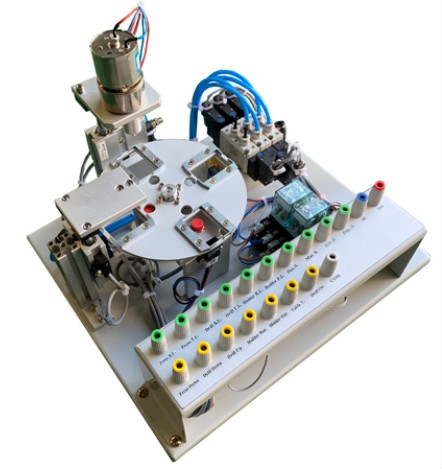
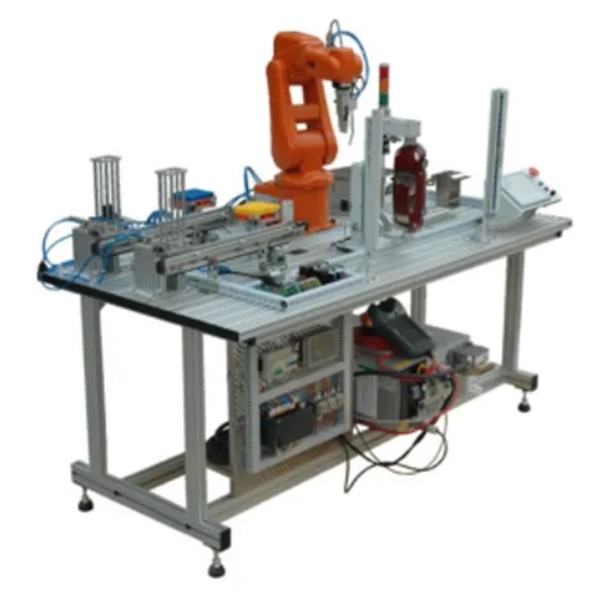
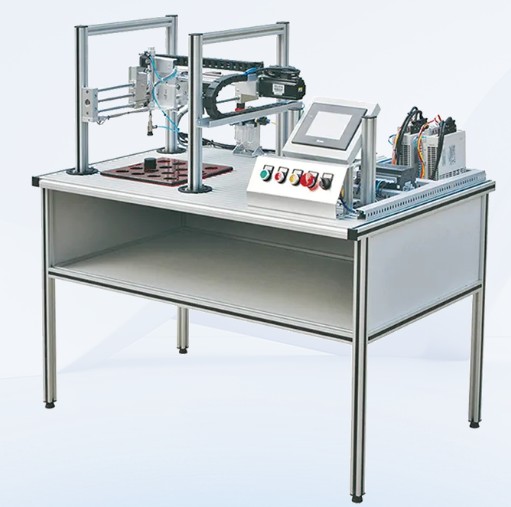
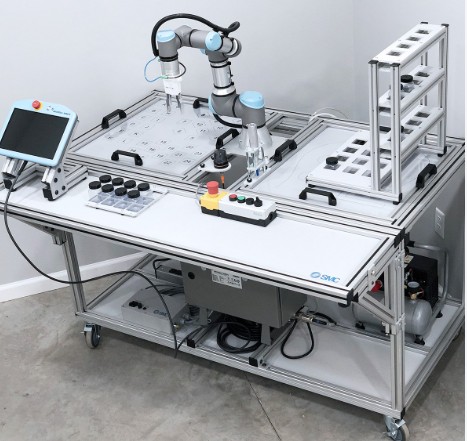
Mechatronics training systems can incorporate mechanical assemblies, motors, sensors, actuators, control circuits, microcontrollers, programmable logic controllers (PLCs), and human-machine interfaces (HMIs). Depending on the educational objectives, equipment may also include pneumatic mechanisms, servo drives, stepper motors, conveyor systems, robotic components, and machine vision technologies. Training equipment can be organized into modular laboratory workstations, allowing students to study individual components before integrating them into complete systems. This approach supports progressive learning, from fundamental electrical and mechanical principles to advanced control, automation, and system integration.
Hands-On Learning & Experimental Activities
University laboratory exercises can cover sensor interfacing, actuator control, motor speed regulation, position control, mechanical transmission, and feedback systems. Students can investigate how sensors detect changes in operating conditions and how controllers use this information to regulate mechanical movement or automate specific tasks. More advanced experiments may involve PLC programming, microcontroller-based control, servo positioning, robotic motion, pneumatic actuation, and communication between system components. These activities can help students understand the complete control cycle, from input measurement and signal processing to decision-making and physical output.
Industry-Inspired Automation Applications
Mechatronics training systems can demonstrate applications commonly found in modern industrial environments, including automated conveyors, pick-and-place mechanisms, sorting stations, positioning systems, robotic workstations, and sensor-based inspection processes. Depending on the system configuration, students can explore sequential control, automated material handling, motion coordination, fault detection, and basic production-line operation. These exercises provide insight into how mechanical components, electronic devices, and software work together to achieve reliable and repeatable performance. By working with representative industrial technologies, students can also develop an understanding of system reliability, maintenance, troubleshooting, operational safety, and efficient equipment utilization.
Integration of Control, Programming & Robotics
Mechatronics training provides opportunities to connect mechanical design with electronic control and embedded programming. Systems may use microcontroller platforms such as Arduino-compatible boards, ESP32, or STM32, alongside industrial controllers such as PLCs, depending on course requirements and application complexity. Students can develop programs to read sensor signals, control motors, coordinate actuators, and respond to changing operating conditions. Where appropriate, training activities can introduce robotic mechanisms, machine vision, data acquisition, and communication between connected devices. These integrated projects encourage students to understand the relationship between hardware, software, and physical system behaviour while strengthening their skills in engineering design, programming, testing, and debugging.
Supporting University Teaching & Research
Mechatronics training systems can support undergraduate programs in mechanical engineering, electrical and electronic engineering, robotics, automation, and mechatronics. They can also provide a practical foundation for capstone projects, laboratory demonstrations, interdisciplinary research, and applied engineering investigations.
Cynex Systems aims to support universities seeking adaptable training equipment that connects theoretical concepts with practical engineering experience. Depending on project requirements, systems may be configured around specific curricula, laboratory layouts, student experience levels, and integration with complementary pneumatic, hydraulic, electronic, and automation training equipment.

- Engineering
- Manufacturing
- Mechatronics
- AI and Machine Vision
- Automation And Robotics