© CyNex Systems, All rights reserved. 2024
Microcontroller-Based Systems
You are here: Cynex.ca
PCB & Embedded Control Systems - Microcontroller-Based Systems
Popular Services:
Cynex Systems
Engineering. Manufacturing. Automation.
One Idea. One vision.
Turning possibilities into performance.
>> Get In Touch
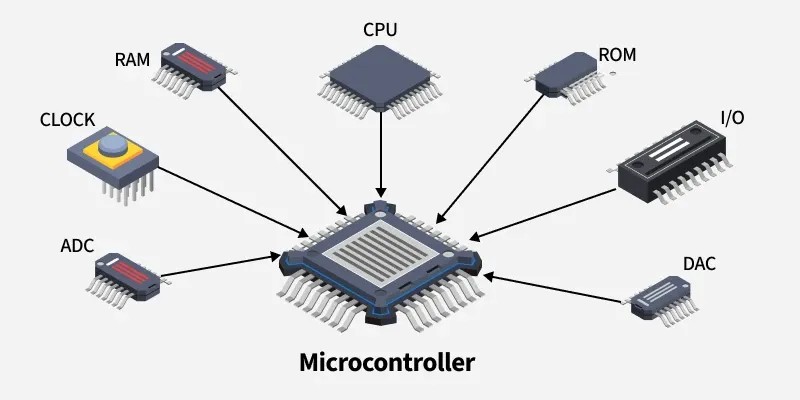
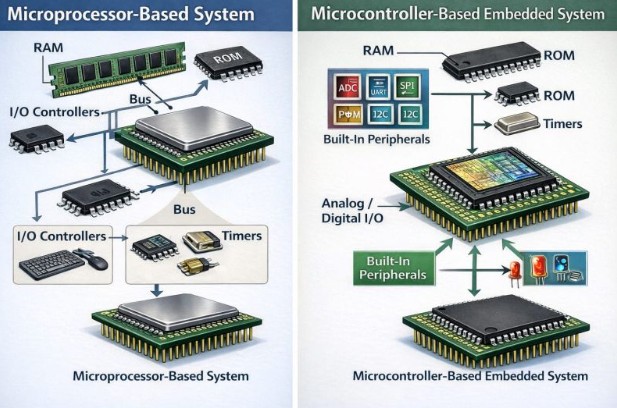
At Cynex Systems, microcontroller-based systems focus on integrating embedded hardware and software to develop practical electronic solutions for monitoring, control, instrumentation, and automation applications. By combining microcontrollers, electronic circuits, sensors, actuators, and embedded programming, customized systems can be developed to meet specific functional and technical requirements. Microcontrollers are widely used in modern engineering systems because they can read input signals, process information, execute programmed instructions, and control connected devices. They provide a flexible foundation for applications ranging from simple electronic controllers and measurement instruments to connected devices, robotics, and industrial automation equipment.
Custom Development, Prototyping & Testing
Microcontroller-based projects may involve requirements analysis, hardware selection, circuit development, prototype assembly, firmware programming, debugging, and system integration. Depending on the project scope, development may progress from an initial proof of concept to a dedicated control board integrated into the final equipment. Testing can include verification of input and output functions, sensor readings, communication interfaces, timing behaviour, actuator responses, and overall system operation. Design refinements may address reliability, power consumption, electrical compatibility, maintainability, and ease of future modification. By evaluating both hardware and software as part of the complete system, development can help identify integration issues and improve the suitability of the solution for its intended application.
Applications Across Engineering & Industry
Microcontroller-based systems can support industrial automation, electronic instrumentation, educational training equipment, laboratory devices, robotics, equipment monitoring, and specialized control applications. Examples include temperature monitoring and regulation, motor control, automated measurement, sensor-based alarms, data logging, access monitoring, and communication between electronic subsystems. Depending on the project, microcontrollers can also be integrated with custom PCBs, human-machine interfaces (HMIs), industrial controllers, and other automation technologies.
Microcontroller Selection & System Design
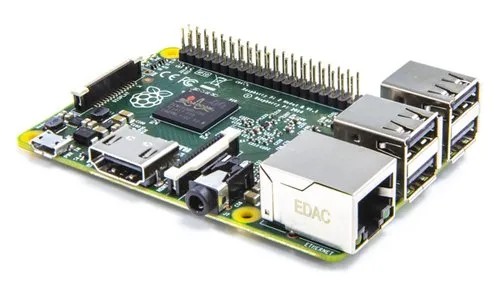
Selecting the appropriate microcontroller is an important part of embedded system development. Depending on processing requirements, memory, input/output capabilities, communication interfaces, power consumption, and connectivity needs, different microcontroller families may be suitable for different applications. Potential platforms include Arduino-compatible systems based on ATmega microcontrollers, Microchip PIC and AVR devices, ESP32, STM32, Raspberry Pi Pico platforms using RP2040 or RP2350, and selected Texas Instruments and NXP microcontrollers. Each platform offers different capabilities and development options, allowing the hardware to be selected according to project complexity and intended use. System design can include microcontroller selection, peripheral configuration, power supply design, input/output planning, communication interfaces, and integration with external electronic circuits. Depending on the application, the design may use a development board for prototyping or a custom PCB for a more application-specific solution.
Embedded Programming & Firmware Development
Embedded software enables a microcontroller to perform defined functions and coordinate the operation of connected hardware. Depending on the selected platform, firmware development may use C, C++, MicroPython, or other supported programming environments. Programming tasks can include reading sensor data, processing analogue and digital inputs, generating output signals, controlling actuators, managing communication, and implementing automated operating sequences. Additional functions may include timer-based operations, interrupt handling, fault detection, and structured data logging. The firmware can be developed around the required application logic, operating conditions, response times, and interaction between system components. Clear program structure and appropriate testing can also help support troubleshooting, future modifications, and ongoing system development.
Actuator Control & Embedded Automation
Microcontrollers can also control physical devices by generating signals that operate motors, relays, valves, indicators, and other actuators through suitable driver circuits. Depending on the system requirements, applications may include DC motor control, servo positioning, stepper motor operation, switching control, and sensor-based automation. Control functions can incorporate digital outputs, pulse-width modulation (PWM), timing sequences, feedback signals, and conditional logic. Where necessary, external driver circuits and electrical protection can be included to accommodate the voltage and current requirements of connected devices. These functions can be applied to automated laboratory equipment, small robotic mechanisms, positioning systems, smart devices, and specialized electronic machinery. Combining sensor inputs with actuator outputs allows systems to respond to changing conditions and perform repeatable tasks.
Cynex Systems aims to support projects requiring adaptable embedded solutions that connect electronic hardware with practical control functions. Each system can be tailored to the required functionality, selected microcontroller platform, software environment, and integration needs.
- Engineering
- Manufacturing
- Mechatronics
- AI and Machine Vision
- Automation And Robotics