© CyNex Systems, All rights reserved. 2024
Microcontroller-Based Training Systems
You are here: Cynex.ca
Educational & Laboratory Equipment - Microcontroller-Based Training Systems
Popular Services:
Cynex Systems
Engineering. Manufacturing. Automation.
One Idea. One vision.
Turning possibilities into performance.
>> Get In Touch
At Cynex Systems, we focus on microcontroller-based training systems designed to support university engineering education, laboratory experiments, and practical learning in embedded systems, electronics, and automation. These systems can help students understand how microcontrollers interact with electronic components, sensors, actuators, communication interfaces, and control systems to perform real-world tasks. Microcontrollers are fundamental to modern technologies, including industrial automation, robotics, smart devices, instrumentation, automotive electronics, and the Internet of Things (IoT). Through structured laboratory exercises and project-based learning, students can develop practical skills in circuit design, embedded programming, hardware interfacing, and system debugging. .
Microcontroller Platforms & Technologies
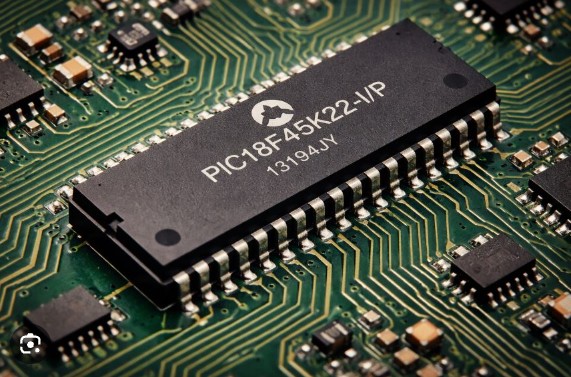
Training systems can be designed around a range of widely used microcontroller platforms, depending on the university curriculum, project requirements, and desired level of complexity. Potential platforms include Arduino-compatible boards using the ATmega328P and ATmega2560, Microchip PIC microcontrollers, Microchip AVR devices, ESP32 and ESP8266, STM32 microcontrollers from STMicroelectronics, and Raspberry Pi Pico boards based on the RP2040 or RP2350. Advanced training applications may also explore Texas Instruments MSP430 and Tiva C microcontrollers, as well as selected NXP microcontroller families. Each platform offers different capabilities in processing, memory, connectivity, peripheral interfaces, and real-time control. Training systems can introduce students to programming environments and development tools appropriate to the selected hardware, including Arduino IDE, Microchip development tools, STM32CubeIDE, and other platform-specific software.
Engineering & Design Capabilities
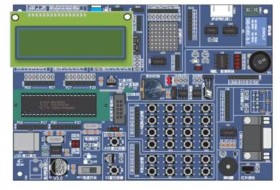
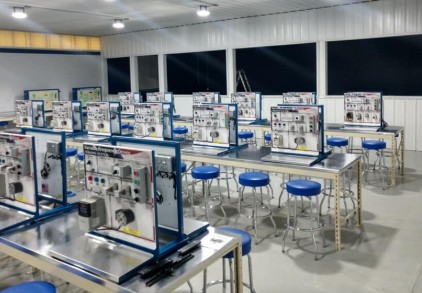
Microcontroller-based training systems can integrate development boards, power supplies, digital and analogue input/output modules, sensors, actuators, display units, communication interfaces, and prototyping circuits. Depending on the application, systems may include temperature sensors, proximity sensors, light sensors, pressure sensors, rotary encoders, DC motors, servo motors, stepper motors, relays, and electronic switching devices. Training equipment may be arranged as modular laboratory panels, development kits, or application-oriented workstations. This approach can allow students to connect hardware modules, write embedded programs, test circuit behaviour, and progressively develop more complex electronic control applications.
Embedded Programming & Practical Experiments
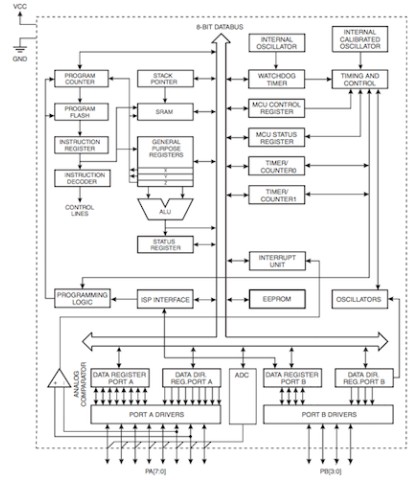
University laboratory exercises can cover microcontroller architecture, digital input/output, analogue-to-digital conversion, pulse-width modulation (PWM), timers, interrupts, and serial communication. Students can learn to read sensor signals, process input data, control outputs, and implement basic decision-making logic through embedded software.
More advanced activities may include UART, SPI, and I²C communication, sensor interfacing, motor control, data logging, and communication between multiple electronic modules. Depending on the platform, training can also introduce wireless connectivity using Wi-Fi or Bluetooth, enabling students to explore IoT concepts and connected monitoring systems.
Industry-Inspired Applications & Projects
Microcontroller-based training systems can demonstrate applications such as automated monitoring, temperature regulation, smart lighting, motor speed control, access monitoring, sensor-based alarms, and small-scale robotic mechanisms. More advanced projects may combine multiple sensors, actuator control, communication modules, and embedded software to reproduce simplified industrial or commercial applications.
Students can use these projects to understand the complete development process, from defining system requirements and selecting components to programming, testing, debugging, and evaluating performance. Such experience can strengthen practical problem-solving skills and provide a foundation for further study in embedded systems, robotics, electronics, and industrial automation.
Supporting University Education & Research
Microcontroller-based training systems can support undergraduate engineering programs, electronics laboratories, computer engineering courses, mechatronics education, and applied research projects. They can be used for demonstrations, guided experiments, individual assignments, and collaborative projects that encourage students to develop and evaluate their own embedded solutions.
CYNEX Systems aims to support universities seeking practical and adaptable training equipment that connects theoretical instruction with hands-on engineering. Depending on project requirements, systems may be configured around specific microcontroller platforms, programming environments, course objectives, and integration needs.
CYNEX Systems — Empowering Embedded Systems Education Through Practical Microcontroller Training.
- Engineering
- Manufacturing
- Mechatronics
- AI and Machine Vision
- Automation And Robotics